

 English
 Español
 русский
Home / News / Industry News / How Pulsation Control Improves the Operating Stability of Car Washer High Pressure Pump Systems
How Pulsation Control Improves the Operating Stability of Car Washer High Pressure Pump Systems
2026-11-27
A high-pressure car washer pump does not deliver water in a perfectly even stream. Inside a reciprocating pump, plungers move back and forth, producing successive suction and discharge strokes. Each stroke changes the volume of water entering the outlet line. The resulting pressure fluctuations are known as pulsation.
Some fluctuation is inherent in this type of pump. The problem starts when it becomes strong enough to shake hoses, disturb spray pressure or place repeated stress on seals and fittings. In a commercial car wash, where equipment may run for hours every day, these effects can become costly.
Pulsation control is therefore an important consideration when designing or selecting a Car Washer High Pressure Pump system.
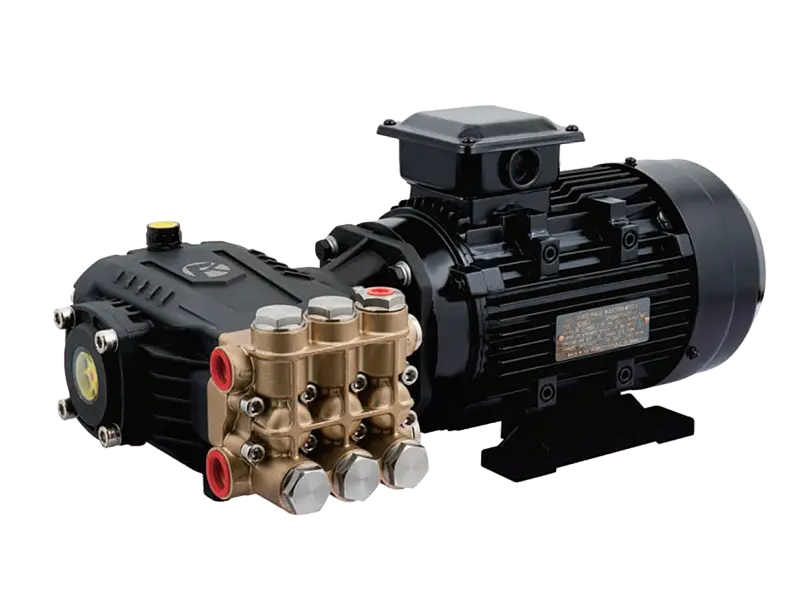
Where Pump Pulsation Comes From
Most high-pressure car washer pumps use a reciprocating plunger or piston mechanism. As the crankshaft rotates, the plungers move through alternating suction and discharge strokes. Water enters the pump during one part of the cycle and is pushed into the discharge line during another.
Unlike a centrifugal pump, which can provide relatively continuous flow, a reciprocating pump produces periodic changes in discharge volume.
The extent of these fluctuations depends on several factors:
- Number and arrangement of plungers.
- Pump rotational speed.
- Crankshaft and valve construction.
- Operating pressure and delivery rate.
- Condition of suction and discharge valves.
- Diameter, length and layout of the connected pipes.
A multi-plunger pump can produce a more uniform discharge because the individual strokes overlap. However, the flow is not completely smooth. Poor inlet conditions or unsuitable pipework can make the remaining fluctuations more noticeable.
What Happens When Pulsation Is Excessive?
The first signs are often easy to notice. A high-pressure hose may move more than usual, the pressure gauge needle may oscillate, or the spray pattern may become inconsistent.
Repeated pressure changes also affect components that are less visible.
- Hoses and pipe connections: Pressure cycling puts repeated loads on hoses, fittings and joints. Poorly supported pipes may vibrate, adding mechanical stress to their connections.
- Seals and valves: Seals and check valves experience repeated pressure changes during operation. Excessive cycling can contribute to fatigue, leakage and premature wear.
- Pump and mounting structure: Hydraulic fluctuations can be transmitted through the pump housing and mounting frame, increasing vibration and mechanical noise.
- Pressure controls: Large fluctuations can make pressure switches and automatic regulators respond less consistently, particularly when their control signals are already close to the switching threshold.
These symptoms do not necessarily mean the pump is defective. A restricted water inlet, loose pipe support or unsuitable dampener can produce similar problems.
Using a Pulsation Dampener to Smooth Discharge Flow
A pulsation dampener is one of the most common ways to reduce pressure fluctuations in reciprocating pump systems.
Many designs contain a gas-charged chamber separated from the water by a diaphragm or bladder. When discharge pressure rises, the chamber accepts a small additional volume of water and compresses the gas. As pressure falls, the compressed gas pushes water back into the line.
This action helps even out the flow between pumping strokes.
Dampener selection requires more than matching the pipe connection. Its working pressure, capacity, fluid compatibility and operating temperature must all suit the pump. Gas pre-charge also needs to follow the manufacturer's specifications. An incorrect pre-charge can leave the device less effective than expected.
Installation position matters too. The manufacturer may specify a particular location and connection arrangement to achieve the intended damping effect.
Other Ways to Reduce Pressure Fluctuations
A dampener cannot compensate for every problem in the hydraulic circuit. Pump construction, inlet conditions and pipework all influence the pressure waveform.
Pump head and plunger arrangement
The number of plungers and the timing of their discharge strokes affect how evenly water enters the outlet. Multi-plunger arrangements generally reduce the variation associated with individual strokes.
Discharge valve design also matters. Worn or contaminated valves can interrupt normal flow and create fluctuations beyond those expected from the pump's operating principle.
Discharge pipeline design
A poorly arranged discharge line can amplify vibration or introduce unnecessary pressure losses. Pay attention to pipe diameter, hose pressure rating, connection size and support spacing.
Long unsupported hose sections may move during operation. Excessive bends and unsuitable fittings can also affect the hydraulic circuit.
Water inlet conditions
The pump needs an adequate and continuous water supply to complete its suction strokes. A clogged filter, undersized supply hose or air leak can cause irregular operation.
Checking the inlet side is particularly important when pulsation appears together with unusual pump noise or inconsistent output. Adding a discharge dampener will not correct a problem caused by insufficient inlet water.
Comparing Common Pulsation Control Methods
| Control method | Main function | What requires attention |
|---|---|---|
| Pulsation dampener | Absorbs pressure fluctuations | Capacity, pre-charge and pressure rating |
| Multi-plunger design | Reduces discharge flow variation | Plunger arrangement and stroke timing |
| Optimized piping | Limits hydraulic disturbances and vibration | Pipe diameter, bends and supports |
| Inlet filtration | Prevents contamination-related restrictions | Filter capacity and cleaning frequency |
| Pressure regulation | Controls operating pressure | Compatibility with pump flow and pressure |
The methods address different parts of the problem. A dampener may reduce pressure peaks, while proper pipe supports address vibration transmitted through the installation. Both may be needed in the same system.
How to Check Whether Pulsation Control Is Working
A pressure gauge can reveal obvious fluctuations, but a conventional gauge may not respond quickly enough to capture short pressure peaks.
For a more detailed assessment, engineers can use pressure transducers with suitable response characteristics and pressure ratings. Measurements should cover different operating conditions rather than just one steady running point.
Useful observations include:
- Peak-to-peak pressure variation during operation.
- Average discharge pressure.
- Pressure changes during startup and shutdown.
- Vibration around the pump and connected pipework.
- Noise changes under different operating loads.
- Spray consistency at the nozzle.
Comparing measurements before and after installing a dampener can show whether the pressure variation has actually decreased. Instruments should be correctly calibrated, and testing must follow appropriate high-pressure safety procedures.
Maintenance Should Include the Dampener and Pump
A dampener can lose effectiveness if its gas pre-charge falls outside the specified range. Check it according to the manufacturer's maintenance instructions, using the prescribed procedure.
Pump valves, seals and inlet filters also need regular attention. Water contamination and normal component wear can gradually change pump behavior. Leaking connections and damaged hoses should be dealt with before they create larger operating problems.
For commercial equipment, keeping records of pressure readings, repairs and component replacements is useful. A gradual increase in vibration or pressure fluctuation may reveal deterioration before the pump develops a more serious fault.
Consider Pulsation When Specifying a Car Washer High Pressure Pump
Pump pressure and flow rate are not the only specifications worth reviewing. Buyers should also ask about the plunger arrangement, pressure fluctuation characteristics, dampener compatibility and inlet water requirements.
A pump that meets the required pressure rating may still need additional hydraulic components to operate smoothly within a particular car wash installation. The discharge pipework, pressure controls and water supply should be considered as part of the same system.
For manufacturers and equipment integrators, testing the complete assembly is more informative than evaluating the pump alone. It shows whether pressure remains stable during continuous washing, repeated trigger release and changes in operating conditions.
Previous Post
No previous article
Next Post
What Causes Pressure Spikes in Systems Using General Pump Unloader Valve
Related Products

CONTACT US
- Address: No. 2880, East Section of Development Avenue, Sanjia Street, Taizhou Bay New District, Taizhou City, Zhejiang, China.
- Tel: +86-13665766622
+86-18806588150 - E-mail: [email protected]
Copyright © Taizhou Feike Mechanical Technology Co., Ltd.

Wholesale Triplex Plunger Pump Factory