

 English
 Español
 русский
What are the Advantages and Limitations of a Piston Pump
2026-05-22
Piston pumps are not the kind of equipment that draws attention on their own. They usually sit inside a system and just keep working. In many industrial setups, they are chosen for one simple reason: they can handle pressure in a steady way.
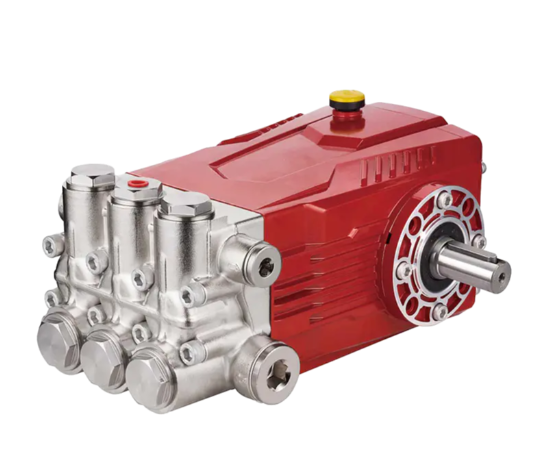
But once they are in use, the behavior is not always as straightforward as it first looks. Some conditions make them perform smoothly. Other situations slowly expose their limits. It depends less on the pump alone and more on how everything around it behaves.
Why Are Piston Pumps Used So Often In Industry?
There is a practical reason behind their popularity. They tend to stay stable when the system demands consistent pressure. That alone makes them suitable for a wide range of applications.
They are also not too sensitive to different working setups. As long as the basic conditions are right, they usually fit in without too much adjustment.
In real workshops, this is often what matters. Not complexity, but whether the equipment can keep running without constant attention.
Still, that does not mean they are completely effortless to use. They respond to conditions more than people expect at first.
How Do They Perform Under High Pressure?
This is where piston pumps are most often discussed.
They work in repeated cycles, pushing fluid step by step. That repeated motion builds pressure in a controlled way. When the system demands higher pressure, they usually hold their behavior without sudden change.
In stable systems, this feels smooth and predictable.
But when conditions start to fluctuate, the response is not always perfectly even. The pump follows the system, and any instability in the environment slowly shows up in operation.
So high pressure is not a problem for them. Unstable pressure is where things start to feel less consistent.
What Advantages Do Piston Pumps Offer In Real Use?
In practical applications, piston pumps show several benefits that explain their wide use. These advantages are not always obvious at first glance but become clear over time.
Some of the main strengths include:
- Stable output behavior during operation
- Ability to handle varying load conditions
- Strong performance in demanding environments
- Compatibility with different system designs
- Predictable response under pressure changes
These points are often experienced during long-term use rather than immediate observation.
A simple comparison helps highlight where piston pumps tend to stand out:
| Aspect | Piston Pumps | Other Pump Types (General View) |
|---|---|---|
| Pressure Handling | Strong under demanding load | May reduce efficiency under stress |
| Output Stability | Consistent over time | Can fluctuate depending on conditions |
| Application Range | Broad usage in systems | Often more limited scope |
| Response to Load Change | Adjusts gradually | May respond less smoothly |
The real value often appears during continuous operation, where stability matters more than speed.
Where Do The Limitations Start To Appear?
No mechanical system stays stable forever, and piston pumps are no exception.
One of the first things that appears over time is wear. The internal parts move repeatedly, and that movement slowly leaves marks. It does not happen quickly, but it is always there in the background.
Another point is sensitivity to working conditions. If the fluid is not clean or the environment is not stable, performance can slowly shift.
Maintenance is also part of the picture. These pumps do not fail instantly without warning. Instead, they gradually change behavior when care is not consistent.
Typical limitations include:
- Gradual wear from repeated motion
- Sensitivity to fluid quality
- Need for regular inspection over time
- Small variations under unstable working conditions
None of these stop the pump from working. They just affect how smooth it feels in long-term use.
How Important Is Maintenance In Real Operation?
In practice, maintenance often decides how long a piston pump stays stable.
When the system is kept clean and checked regularly, performance usually remains steady for a long time. When maintenance is irregular, small issues start to build up quietly.
Even small particles in the system can make a difference over time. It may not show immediately, but the internal movement becomes less smooth.
This is why two identical pumps can behave differently in real factories. It is often not the design that changes, but the maintenance habits around it.
How Does System Matching Affect Performance?
A piston pump does not work alone. It depends on the system it is placed in.
If the system is well balanced, the pump feels stable. If there is mismatch between components, the behavior becomes less predictable.
Sometimes the issue is not obvious at the beginning. It only becomes noticeable after long operation, when small inconsistencies start to accumulate.
In many cases, performance problems are not about the pump itself, but about how well it fits into the full setup.
What Operating Conditions Change Its Behavior?
In real environments, conditions are rarely fixed.
Temperature shifts, load changes, and different working cycles all influence how the pump behaves.
When everything stays steady, piston pumps tend to perform in a very controlled way. But when conditions change often, the system has to adjust constantly, and that is where variation appears.
It is not failure. It is adaptation, but it does affect how consistent the output feels.
What Should Be Considered Before Choosing One?
Choosing a piston pump is not only about capability. It is more about whether the system needs what it offers.
A few practical points usually matter most:
- Whether pressure needs to stay stable over time
- How consistent the working environment is
- Whether maintenance can be done regularly
- How well it matches the rest of the system
- Whether operation is continuous or intermittent
In many real cases, the decision is not based on a single factor. It is a balance between stability and operating conditions.
How It Fits Into Modern Industrial Use?
Even with newer systems appearing, piston pumps are still widely used.
The reason is simple. Many processes still need controlled pressure and predictable output. That requirement has not changed much.
What has changed is expectation. Systems now often run longer and demand more consistency, which puts more focus on maintenance and integration.
So the pump itself remains the same idea, but how it is used has become more important than before.
Previous Post
What Is a Ball Piston Pump and How Does It Work
Next Post
What Are The Advantages Of Three Plunger High Pressure Pump
Related Products


CONTACT US
- Address: No. 2880, East Section of Development Avenue, Sanjia Street, Taizhou Bay New District, Taizhou City, Zhejiang, China.
- Tel: +86-13665766622
+86-18806588150 - E-mail: [email protected]
Copyright © Taizhou Feike Mechanical Technology Co., Ltd.

Wholesale Triplex Plunger Pump Factory