

 English
 Español
 русский
What Are The Advantages Of Three Plunger High Pressure Pump
2026-05-15
Three plunger high pressure pumps are widely used in systems that require steady water output and consistent force. Their structure is based on repeated motion across three internal plungers, working in a coordinated pattern. This design helps manage flow behavior in a smoother way compared to simpler pumping setups.
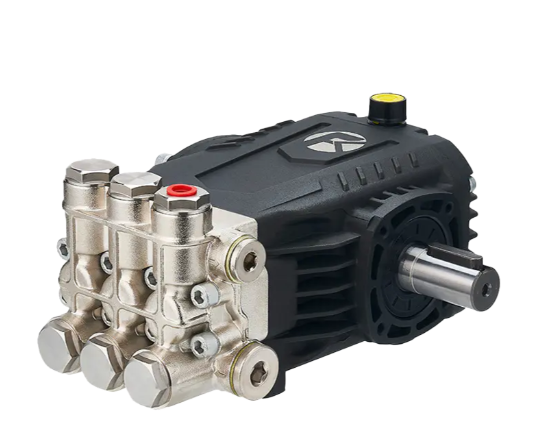
In many modern applications, stability matters as much as power. These pumps are often selected when both are needed together. Their performance characteristics make them suitable for environments where water flow cannot be uneven or interrupted.
Why Does A Three Plunger Design Matter?
A pumping system is only as stable as its internal motion. In a three plunger setup, each plunger works in sequence rather than all at once. This creates a more balanced movement inside the pump.
Instead of relying on a single action cycle, the load is shared. When one plunger is completing its stage, another is already in motion. This overlap reduces gaps in output.
The result is a smoother flow pattern. Water delivery becomes more consistent, especially during longer operation periods.
This structure also reduces sudden changes in internal pressure behavior. The system feels more controlled, even when demand shifts.
How Does It Improve Flow Stability?
Flow stability is one of the most noticeable benefits of this pump type. Water output tends to remain more even over time.
In simpler systems, flow may rise and fall depending on internal movement. In a three plunger setup, these fluctuations are reduced through overlapping cycles.
Each plunger contributes a portion of the total output. Because their movement is staggered, the combined result is less interrupted.
| Pump Structure Type | Flow Behavior | Output Consistency |
|---|---|---|
| Single plunger | More variation | Less stable |
| Multi-stage system | Moderately balanced | Medium consistency |
| Three plunger setup | Overlapping flow cycles | More steady output |
This balance is especially useful in continuous-use environments.
What Makes Pressure Output More Even?
Pressure behavior inside a pump is closely linked to internal motion. When movement is uneven, pressure can fluctuate.
Three plunger systems reduce this effect by distributing force across multiple points. Instead of a single pressure pulse, the system produces overlapping pressure waves.
These waves support each other rather than working independently. This creates a more even output feel.
The effect is not about increasing pressure alone. It is about smoothing how pressure is delivered over time.
This is important in systems where sudden changes could affect downstream performance.
Why Is Continuous Operation More Stable?
Continuous operation places constant demand on any pumping system. Heat, movement, and flow resistance all increase over time.
Three plunger pumps handle this condition through shared workload. Each plunger takes part of the operational cycle.
When one component is completing its movement, another is already active. This reduces strain on any single part.
The system does not rely on one repetitive action alone. Instead, it spreads activity across multiple cycles.
This structure helps maintain performance consistency during extended use periods.
How Does It Reduce Mechanical Strain?
Mechanical strain often develops when a single component performs repeated heavy movement. Over time, this can lead to uneven wear.
In a three plunger system, motion is divided. Each plunger handles part of the workload.
This distribution reduces concentrated stress. Internal parts experience more balanced usage patterns.
Movement becomes less repetitive in one area. This can help maintain smoother operation behavior over time.
Even when used in demanding conditions, the workload is not focused on a single point.
What Role Does Design Play In Efficiency?
Efficiency in pumping systems is not only about power. It is also about how smoothly energy is converted into movement.
The three plunger structure allows more continuous energy transfer. Instead of short bursts, output is spread across overlapping cycles.
This reduces energy loss caused by stop-and-start behavior. The system stays in motion more consistently.
It also helps maintain steady resistance handling. When flow resistance changes, the system can adjust without major disruption.
Efficiency in this context refers to stability of output rather than raw force alone.
How Does It Handle Variable Demand?
In many real-world applications, demand is not constant. Water usage may change depending on system activity.
Three plunger pumps respond to these changes through layered motion. Because multiple plungers are active at different times, the system adapts more smoothly.
When demand increases, overlapping cycles help maintain output continuity. When demand decreases, the system continues running without abrupt changes.
This adaptability is part of its structural advantage.
It supports situations where flow conditions are not predictable.
Why Is Maintenance Behavior More Manageable?
Maintenance needs are influenced by how evenly a system operates. When wear is distributed, inspection patterns tend to be more predictable.
In a three plunger setup, internal activity is shared. This means wear does not concentrate in a single area.
Routine checks often focus on general condition rather than isolated stress points.
Cleaning and inspection processes follow a consistent pattern. There is less likelihood of sudden imbalance caused by uneven use.
While maintenance is still required, the behavior of the system tends to be more uniform.
What Applications Benefit Most From This Pump Type?
Three plunger high pressure pumps are used in environments where stable flow and consistent pressure matter.
They are often found in systems that require continuous water movement or controlled cleaning processes.
Typical application areas include:
- Industrial cleaning environments
- Water circulation systems
- Equipment support systems requiring steady flow
- Processes involving repeated pressure-based operation
- Systems where output stability is more important than short bursts
Each application relies on consistent behavior rather than fluctuating performance.
How Does It Compare To Simpler Pump Structures?
Different pump designs serve different needs. Simpler systems may focus on basic flow generation. Three plunger systems focus more on stability.
Single-action systems tend to produce more variation in output. This can be acceptable in short-duration use.
Three plunger systems introduce layered motion. This reduces sudden changes in output behavior.
The difference is not only structural. It is also about how the system manages time and movement.
More coordinated movement leads to smoother performance patterns.
What Makes It Suitable For Long-Term Use?
Long-term use requires more than initial performance. It depends on how a system behaves over repeated cycles.
Three plunger pumps distribute activity across multiple internal components. This helps avoid concentrated wear patterns.
Consistent motion also helps reduce sudden stress changes inside the system.
Over time, this balance supports stable operation without major fluctuations in behavior.
The design supports continuity, which is important in extended usage environments.
Three plunger high pressure pumps stand out because of how they manage movement across multiple internal points. Their advantage comes from structure, coordination, and balance in operation rather than isolated force output.
Previous Post
What are the Advantages and Limitations of a Piston Pump
Next Post
What are Common Problems with Feike High Pressure Pump
Related Products


CONTACT US
- Address: No. 2880, East Section of Development Avenue, Sanjia Street, Taizhou Bay New District, Taizhou City, Zhejiang, China.
- Tel: +86-13665766622
+86-18806588150 - E-mail: [email protected]
Copyright © Taizhou Feike Mechanical Technology Co., Ltd.

Wholesale Triplex Plunger Pump Factory