

 English
 Español
 русский
Home / News / Industry News / What Is a Pressure Regulator Valve and How Does It Work in Industrial Systems?
What Is a Pressure Regulator Valve and How Does It Work in Industrial Systems?
2026-11-06
Pressures in industrial systems don't stay put. They drift, surge, drop. Fluids and gases need to stay within certain limits—too high and you're looking at equipment damage, process inaccuracy, safety hazards. Too low and performance drops off or production stalls. A pressure regulator valve handles exactly that: takes a higher inlet pressure and knocks it down to something lower and steadier.
If you're an engineer, on the maintenance crew, or sourcing components, understanding What Is a Pressure Regulator Valve and how it works will help you pick the right one. Designs differ, but the core job doesn't: hold the required downstream pressure as conditions shift.
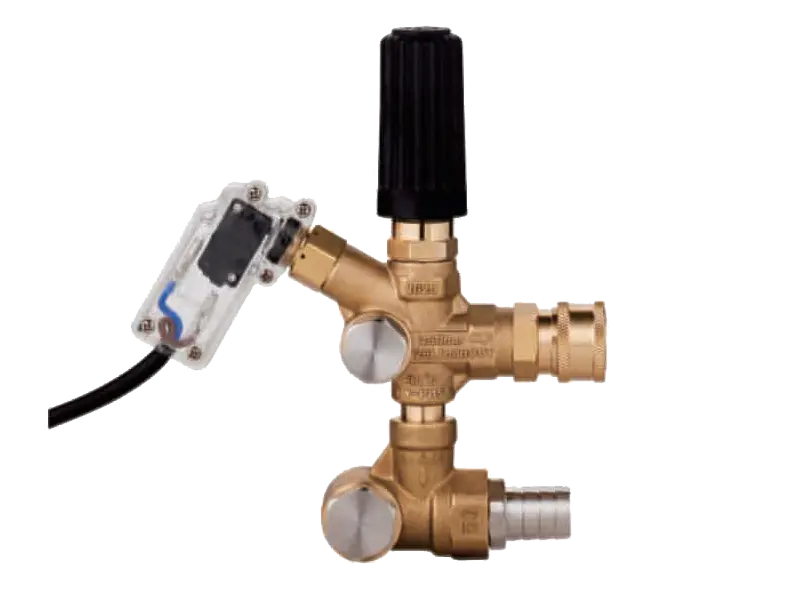
What Is a Pressure Regulator Valve?
Mechanically speaking, it's a control device that reduces and regulates fluid or gas pressure. You feed it a supply that might be bouncing around, and it delivers a preset outlet pressure.
Where do you see these? Compressed air systems, gas distribution, water networks, hydraulic equipment, processing lines. They shield downstream components from pressure spikes and keep operating conditions more consistent.
A typical regulator breaks down into a few key parts: a valve body (contains the internal flow passage, connects to the pipeline), valve seat and plug or poppet (controls how much fluid or gas gets through), a diaphragm or piston (reacts to downstream pressure changes), an adjusting spring (sets the desired outlet pressure), and an adjustment screw or knob (lets operators change the setting on adjustable models).
Construction details vary—regulator type, pressure range, fluid compatibility, application requirements all play in.
How Does a Pressure Regulator Valve Work?
Most common industrial regulators are self-operated. They use downstream pressure feedback to adjust valve opening automatically.
Downstream pressure drops below the setpoint? The adjusting spring pushes the diaphragm or piston in a direction that opens the valve. More fluid or gas flows downstream. Outlet pressure rises, acts against the diaphragm or piston. Once pressure hits the setpoint, the feedback force balances the spring force, and the valve reduces its opening. Pressure climbs further? The regulator closes more to restrict additional flow. Continuous adjustment—that's how outlet pressure stays relatively stable as demand changes.
The sequence goes something like this: high-pressure fluid or gas enters, the internal mechanism controls flow through the valve opening, downstream pressure acts on the sensing element, the sensing force balances against the spring force, and the valve adjusts its opening to maintain the target pressure.
One thing to keep straight—a regulator doesn't create pressure. It controls and reduces supply pressure. Whether it holds a stable outlet depends on correct sizing, available inlet pressure, flow demand. Get those wrong and it won't matter how fancy the regulator is.
Common Types of Industrial Pressure Regulators
Different jobs need different designs. Medium, operating pressure, required flow rate, control accuracy—all of it steers the choice.
| Regulator type | Main characteristics | Typical applications |
|---|---|---|
| Direct-operated regulator | Uses a spring and diaphragm or piston for mechanical control | Compressed air and general gas systems |
| Pilot-operated regulator | Uses a pilot mechanism to control the main valve | Higher flow rates and larger industrial systems |
| Single-stage regulator | Reduces pressure in one regulation stage | Applications with relatively stable inlet pressure |
| Two-stage regulator | Reduces pressure through two stages | Applications requiring improved outlet stability |
Direct-operated models are simple and common in general industrial settings. Pilot-operated designs offer more precise control or handle higher capacities, depending on configuration. Two-stage regulators come in handy when inlet pressure varies a lot and you need steadier downstream pressure.
Where Are Pressure Regulator Valves Used?
Pressure control is essential to reliable operation, so regulators show up across many sectors.
Compressed air systems—regulators bring plant air pressure down to what pneumatic tools, actuators, production equipment need. Proper settings prevent excessive pressure from raising air consumption or damaging components.
Gas supply systems—industrial burners, welding equipment, gas distribution lines use regulators to deliver suitable downstream pressure. Gas compatibility and ventilation requirements matter during selection.
Water treatment and distribution—regulators control pipeline pressure and protect downstream equipment from fluctuations.
Hydraulic systems—certain pressure-control valves regulate pressure in hydraulic circuits. But relief valves and pressure-reducing valves do different things, so engineers need to pick the correct component for the circuit design. Mixing them up causes problems.
Key Factors When Selecting an Industrial Pressure Regulator
The regulator has to match system requirements. Picking a model based only on pipe size or nominal pressure can lead to unstable operation, insufficient flow, or premature failure.
Before buying, check: inlet pressure (normal and maximum supply), outlet pressure (required setpoint and adjustment range), flow capacity (minimum, normal, and maximum demand), fluid compatibility (gas or liquid type, material compatibility), temperature range (operating and ambient), connection size (thread, flange, or other standard), pressure rating (maximum allowable working pressure).
Also review the manufacturer's flow data and pressure-droop characteristics. Pressure droop is how outlet pressure changes as flow demand increases. In systems with variable consumption, it's a performance factor worth paying attention to.
Common Problems and Maintenance Considerations
Contamination, wear, incorrect sizing, unsuitable operating conditions—regulators run into trouble. Symptoms include unstable outlet pressure, pressure creep, restricted flow, leakage, abnormal noise.
Regular inspection catches these early. Check for external leaks, inspect filters where fitted, monitor pressure readings under representative operating conditions. Internal parts—diaphragms, seals, valve seats—may need replacement per manufacturer guidance.
Before servicing, isolate the regulator and safely depressurize the system. Gas and high-pressure applications may call for extra precautions and qualified technicians. And never exceed the regulator's specified pressure or temperature limits. That's not a suggestion.
Improve System Reliability With Proper Pressure Regulation
A pressure regulator valve keeps downstream pressure where it needs to be despite supply fluctuations and changing flow demand. Performance hinges on correct design selection, verified flow capacity, material compatibility, and sensible maintenance.
Evaluate the complete operating range. Get technical documentation from the manufacturer. Correct selection and installation protect downstream equipment, support consistent process conditions, and improve overall system reliability.
Previous Post
No previous article
Next Post
Which Materials Are Best for Regulating Valves in Corrosive, High-Temperature, or High-Pressure Applications?
Related Products


CONTACT US
- Address: No. 2880, East Section of Development Avenue, Sanjia Street, Taizhou Bay New District, Taizhou City, Zhejiang, China.
- Tel: +86-13665766622
+86-18806588150 - E-mail: [email protected]
Copyright © Taizhou Feike Mechanical Technology Co., Ltd.

Wholesale Triplex Plunger Pump Factory