

 English
 Español
 русский
China High Pressure Pump Types and Their Industrial Applications
2026-06-19
In many industrial environments, pressure is not something people notice directly, but it quietly affects how systems behave. When fluid needs to move through long pipelines, when surfaces need cleaning, or when processes depend on controlled flow, pressure becomes part of the background structure that keeps everything running in order.
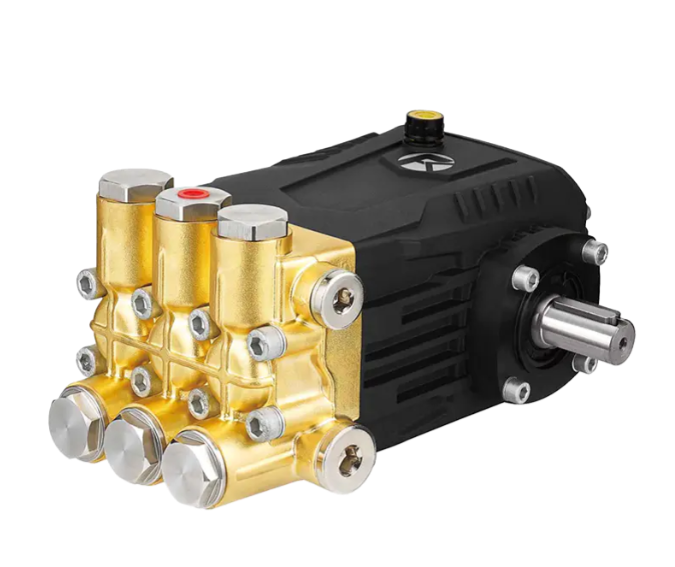
High pressure pumps in China have developed into a wide category of equipment that serves these needs in different ways. Instead of relying on a single design direction, they appear in several forms, each shaped by how the system is expected to work in real conditions.
What makes this topic interesting is not only the equipment itself, but how differently each type behaves once placed into an industrial setting.
Why do industrial systems rely on high pressure pumps?
Industrial work often involves more than just moving liquid from one point to another. There are situations where force becomes necessary. Surfaces may need to be cleaned after long production cycles. Materials may need to be pushed through systems that stretch across large facilities. Some processes also require fluid to be delivered with steady strength over time.
A basic pump can move liquid, but it may not provide enough force for these tasks. That is where high pressure pumps come into the picture.
They are not designed to make things complicated. Their role is actually quite direct. They take existing fluid movement and give it more energy so that it can perform tasks that normal flow cannot handle.
In many factories and working sites, this makes them part of daily operation rather than special equipment.
What types of China High Pressure Pump are commonly seen?
Across industrial use, several main pump structures appear repeatedly. Each one creates pressure in its own way, and this difference shapes where it is used.
| Pump type | Working behavior | Typical application direction |
|---|---|---|
| Piston type | Repeated forward and backward motion | Cleaning, surface impact work |
| Plunger type | Steady linear push movement | Continuous industrial operation |
| Diaphragm type | Flexible separation inside flow system | Chemical handling, controlled transfer |
| Multistage type | Pressure builds step by step | Long-distance fluid movement |
| Jet type | Fast directed flow impact | Surface cleaning and removal tasks |
These categories are not strict boundaries. In real use, there is often overlap. But they help explain why different pumps behave differently even when they seem similar from the outside.
How does a piston type pump behave in real operation?
A piston type pump creates pressure through repeated movement inside a chamber. The motion is not smooth in a continuous line. Instead, it works in cycles.
This cycling creates bursts of pressure that appear again and again. In practice, this makes the flow feel less constant and more rhythmic.
In industrial cleaning situations, this rhythm can be useful. When a surface needs repeated force, the pulsing effect helps remove layers gradually instead of all at once.
Operators often notice that this type of pump feels active during operation. It does not simply push fluid forward quietly. It works in a repeating pattern that can be felt through the system.
Where plunger type pumps are usually preferred?
Plunger type pumps behave differently. The movement inside is more direct and stable. Instead of repeating cycles that vary in intensity, they tend to produce a more consistent output.
This steady behavior makes them suitable for systems that run for longer periods without interruption.
In many industrial setups, consistency matters more than sudden force. When a system is expected to operate continuously, changes in pressure can affect overall stability.
Plunger type pumps are often selected when the goal is to keep things running without noticeable fluctuation.
They do not draw attention during operation. They simply maintain flow in a steady direction.
What makes diaphragm pumps different from other types?
Diaphragm pumps use a flexible barrier inside their structure. This barrier separates the driving mechanism from the fluid itself.
Because of this separation, the fluid does not come into direct contact with mechanical parts in the same way as other pump types.
This design makes them suitable for situations where the fluid needs to remain stable or isolated during movement.
Their behavior feels more controlled and less force-driven compared to piston or jet types. Instead of focusing on impact or speed, they focus on careful transfer.
In industrial environments, this is useful when handling materials that require more controlled movement rather than aggressive pressure.
How do multistage pumps create pressure over distance?
Multistage pumps work through a layered internal structure. Instead of building pressure in one step, they increase it gradually across several stages.
Each stage adds a portion of pressure. When combined, the final output becomes stronger than any single stage alone.
This gradual buildup helps when fluid needs to travel across long distances or through systems with changing elevation.
In real operation, this means the pump does not push everything at once. It builds strength step by step as the fluid moves forward.
This behavior often results in smoother flow across complex systems, especially in large industrial environments.
Where jet type pumps fit into industrial use?
Jet type pumps behave in a more direct and visible way. They produce a strong stream of fluid that impacts surfaces with noticeable force.
Instead of relying on internal pressure cycles, the effect comes from the speed and direction of the flow itself.
This makes them suitable for cleaning tasks where material needs to be removed from surfaces quickly.
In industrial environments, jet pumps are often used in situations where speed of cleaning matters more than gentle handling.
They are straightforward in function. When activated, the flow is directed and focused.
What industries commonly rely on high pressure pumps?
High pressure pumps are not limited to one field. They appear across many industries where controlled fluid movement is required.
| Industry | Typical usage behavior |
|---|---|
| Manufacturing | Equipment cleaning and preparation |
| Construction | Surface treatment and washing |
| Energy systems | Support fluid movement |
| Marine environments | Hull cleaning and maintenance |
| Processing facilities | Controlled fluid transfer |
Each industry uses pressure in a slightly different way. In some cases, it is about cleaning. In others, it is about movement or system support.
What connects them is the need for controlled force rather than simple flow.
How does pump selection affect system behavior?
Choosing a pump type is not only about matching size or capacity. It is more about how the pump behaves during operation.
A system that requires steady flow may not perform well with a pump that produces pulsed output. At the same time, a system that needs repeated impact may not benefit from a smooth constant flow.
This is where understanding pump behavior becomes important.
In many cases, system design is adjusted around pump characteristics rather than forcing one pump to fit every situation.
Even small differences in flow behavior can influence how the entire system responds under load.
What role does manufacturing consistency play?
In industrial equipment, consistency is often more important than appearance. When pumps are produced in large numbers, small variations in internal structure can affect how pressure behaves in real use.
Factories that maintain stable production patterns tend to produce pumps with more predictable behavior across batches.
This helps reduce unexpected changes when equipment is used in continuous operation.
It also supports long-term planning. When behavior is stable, maintenance cycles become easier to manage and system performance becomes easier to predict.
In practical environments, this kind of stability is often more valuable than technical complexity.
Why China high pressure pumps appear across so many systems?
One reason these pumps are widely used is the range of structures available. Instead of relying on a single design approach, different pump types are developed for different working needs.
This flexibility allows them to be used in both simple and complex systems without requiring major changes in setup.
Another reason is adaptability. Industrial environments vary widely, and pump behavior needs to match those differences.
High pressure pumps from China cover multiple working patterns, which makes them suitable for a broad range of applications.
They do not function as a single solution. They function as a set of options that can be matched to different system behaviors.
Previous Post
How Can Users Evaluate the Durability of a China Plunger Pump
Next Post
What Is the Difference Between Plunger Pump Factory and Other Pump Factory Types
Related Products

CONTACT US
- Address: No. 2880, East Section of Development Avenue, Sanjia Street, Taizhou Bay New District, Taizhou City, Zhejiang, China.
- Tel: +86-13665766622
+86-18806588150 - E-mail: [email protected]
Copyright © Taizhou Feike Mechanical Technology Co., Ltd.

Wholesale Triplex Plunger Pump Factory