

 English
 Español
 русский
Home / News / Industry News / What Is the Difference Between Plunger Pump Factory and Other Pump Factory Types
What Is the Difference Between Plunger Pump Factory and Other Pump Factory Types
2026-06-12
A pump factory is not a single uniform space. Even when the buildings look similar from outside, the internal logic of production can be quite different. A plunger pump factory follows one kind of rhythm, while other pump factories follow another. The differences are not always obvious at first glance. They appear in how materials move, how workers interact with parts, and how each stage is organized.
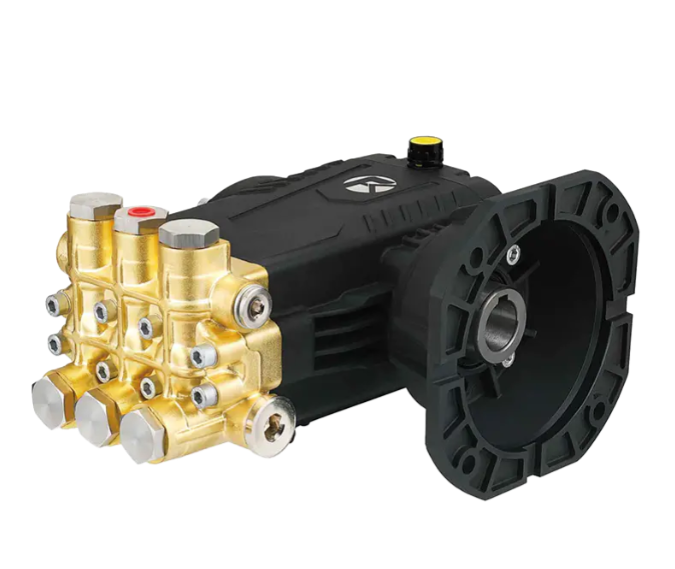
Understanding these differences helps explain why production styles vary so much across similar industries.
What Defines a Plunger Pump Factory in Manufacturing Terms?
A pump factory has a certain feel you notice right away. It's built around precision and steady, repeating motion. Everything inside revolves around parts that will slide back and forth thousands of times under high pressure, so the whole place is tuned for tight control and careful alignment from the very first step.
You see it in how the work flows. Raw stock comes in as plain bars or castings, nothing fancy. Then it moves through turning, milling, grinding, and honing in a pretty fixed sequence. Each component has to hit consistent tolerances because even a tiny mismatch in the plunger, cylinder, or valve seats can cause vibration, leaks, or early wear later on. The layout feels more concentrated than other pump shops—stations are arranged for smooth, predictable movement with less jumping around between wildly different jobs.
Compared to factories making centrifugal pumps or diaphragm units, this place runs tighter. Other shops might handle a broader mix of designs, bigger housings, or simpler internal flows that forgive a bit more variation. A plunger pump line, though, repeats the same core operations day after day. Workers get very good at spotting the small things: a slight change in surface finish, how a seal seat feels under the gauge, or the sound a part makes when it's almost right. Adjustments come from experience and close observation more than full redesigns.
That repetition creates its own identity. It's not about making a hundred different models every month. It's about making the same type of movement reliable—smooth stroking, strong pressure, long life. Consistency in fit and finish matters more than variety. When you walk the floor, you sense the focus: everything is aimed at keeping that controlled, rhythmic action rock-solid once the pump leaves the door.
How Does Its Production Flow Differ from Other Pump Factories?
Production flow inside a pump factory often follows a narrow and continuous path. Materials move from one stage to the next with limited deviation. Each stage is connected closely to the previous one.
The flow is shaped by the need for precise alignment. Components are not only shaped but also matched carefully before moving forward. This reduces interruptions later in the process.
In other pump factory types, the flow can feel more flexible. Some factories may handle multiple product families at once. Others may adjust production lines more frequently based on demand or design changes. This creates a flow that is less linear.
A simple comparison helps show the difference:
| Aspect | Plunger Pump Factory Flow | Other Pump Factory Flow |
|---|---|---|
| Movement of materials | Steady and structured | More flexible and varied |
| Stage transitions | Closely linked | Sometimes separated |
| Adjustments during process | Controlled and limited | More frequent and broad |
| Production rhythm | Repetitive and steady | Mixed and adaptable |
In a factory, changes are introduced carefully. A small adjustment is reviewed before it spreads through the line. In other factories, changes may be applied more quickly across different product lines.
The difference is not about speed alone. It is about how tightly each stage depends on the next.
What Kind of Materials and Components Are Commonly Handled?
Material handling in a factory often follows a predictable pattern. The materials are chosen for their ability to maintain shape and stability during repeated motion. They must support consistent interaction between moving parts.
Because of this, handling is careful from the start. Materials are stored in organized spaces. Movement between stations is controlled to avoid unnecessary variation. Even small irregularities are noted early.
Other pump factories may deal with a broader range of materials. Some are designed for general fluid movement. Others may prioritize lightweight structures or flexible assembly. This wider range of use cases creates more diversity in material handling.
In a factory, components often share a similar purpose. They are designed to work together in a synchronized way. Each piece depends on the next to maintain smooth movement.
In contrast, other pump factories may produce parts that serve different functions within the same system. This can reduce the need for tight matching between every component.
The handling process reflects this difference. One type of factory moves toward uniformity. The other allows more variation in input materials and part behavior.
How Does Assembly Work Differ Across Factory Types?
Assembly in a China Plunger Pump factory is usually focused on close fitting and careful alignment. Parts are brought together in a controlled sequence. Each connection is checked before moving forward.
The assembly area tends to feel structured. Workers follow a clear order. Adjustments are made in small steps rather than large changes. The goal is to ensure that each part interacts smoothly with the next.
In other pump factories, assembly may involve more variation. Some designs allow for modular structures. Parts may be interchangeable or adjusted depending on the final application. This creates a more flexible assembly environment.
The contrast can be seen in how workers approach the process:
| Assembly Feature | Plunger Pump Factory | Other Pump Factories |
|---|---|---|
| Sequence style | Fixed and repeated | Flexible and changing |
| Part matching | Tight and specific | Broader compatibility |
| Adjustment style | Small corrections | Larger modifications |
| Workflow feel | Steady rhythm | Mixed pace |
Assembly in a factory is less about variation and more about repeatable accuracy. Other factories may accept a wider range of acceptable outcomes, depending on product purpose.
This difference shapes how long each assembly cycle takes and how much adjustment is needed along the way.
What Role Does Quality Checking Play in Each Factory Type?
Quality checking exists in every pump factory, but its role changes depending on the production style.
In a pump factory, quality checking is closely integrated into each stage. It is not limited to the end of production. Instead, it appears repeatedly throughout the process. Small checks happen during machining, assembly, and finishing. This helps maintain consistency across units.
Other pump factories may rely more on stage-based checks. Certain points in the production line are designated for inspection. Between these points, work continues with fewer interruptions.
The difference is in timing and frequency. One system spreads attention across the entire process. The other concentrates it at specific points.
| Quality Aspect | Plunger Pump Factory | Other Pump Factories |
|---|---|---|
| Inspection timing | Continuous and frequent | Stage-based |
| Focus | Consistency across units | End-stage confirmation |
| Adjustment response | Immediate | Periodic |
| Process integration | High | Moderate |
In a pump factory, even small differences are noticed early. In other factories, variation may be handled later in the process.
Neither approach is isolated. Both aim to support stable output. The difference lies in how attention is distributed.
How Does Production Flexibility Change Between Factory Models?
The factory floor tells you a lot about how flexible a place really is the moment you walk in.
A plunger pump factory usually runs with a tighter, more fixed setup. The lines have a rhythm that doesn't change much from week to week. Jobs follow the same sequence day after day—same parts, same setups, same flow. When they do make a change, it's thought through carefully, often with meetings, trials, and sign-offs. That approach keeps quality steady and scrap low, but it doesn't leave much room for quick pivots if a customer suddenly wants something different.
Other pump factories feel noticeably looser. They're built to shift gears more often—different models, varying sizes, special materials, or custom features. One week they might be running small chemical pumps, the next they're switching over to larger industrial units. The tooling gets swapped out faster, the schedules get rewritten on the fly, and the workers get used to jumping between jobs. It's more responsive when orders change or new requests come in, but it can feel a bit chaotic compared to the steady pulse of a dedicated plunger line.
You can sense the difference in the mood of the place. One factory feels solid and predictable, almost calm in its repetition. The other has a quicker, more restless energy—people moving between stations, carts of material rolling in new directions, and whiteboards full of last-minute schedule updates.
It changes how people work too. In the more flexible shops, a machinist might set up a part one day and help with assembly or testing the next. Roles blend together. In the tighter plunger plants, most folks stay in their lane—same machine, same responsibilities—because that consistency is what keeps everything running smooth.
All of it ripples out: planning is simpler and more reliable in fixed setups, but you carry more inventory just in case. Flexible places stay lighter on stock and react quicker, yet they need sharper coordination so things don't tangle up.
Both ways work. It just depends on what the market is asking for—rock-solid reliability or the ability to turn on a dime.
What Are the Differences in Workforce Skills and Daily Operations?
Workforce experience also reflects the type of factory.
In a factory, workers often focus on repeated tasks that require careful attention. Over time, familiarity with small details becomes important. A slight change in sound, movement, or fit can signal something that needs attention.
Daily operations tend to follow a stable rhythm. Tasks are familiar. Adjustments are subtle. The environment rewards consistency and patience.
In other pump factories, workers may handle a wider range of tasks. Production variation can require more frequent adaptation. This creates a working environment that shifts more often during the day.
A comparison helps clarify this:
| Workforce Aspect | Plunger Pump Factory | Other Pump Factories |
|---|---|---|
| Task variation | Low to moderate | Moderate to high |
| Skill focus | Detail recognition | Adaptability |
| Daily rhythm | Stable | Changing |
| Work structure | Repetitive cycles | Mixed activities |
The difference is not about difficulty. It is about stability versus variation in daily tasks.
Why Do These Factory Types Create Different Production Styles?
The differences between plunger pump factories and other pump factory types come from the purpose of the products themselves.
A plunger pump is built around repeated motion and close interaction between parts. This naturally leads to a production style that values consistency. Each step supports the next in a tightly linked sequence.
Other pump types may serve broader or more flexible functions. Their production systems reflect that variety. More adaptable workflows allow for changes in design, material use, and assembly structure.
Over time, these needs shape the factory itself. Layouts are designed differently. Workflows evolve differently. Even communication styles within teams adjust to match the production rhythm.
What emerges are two distinct approaches to manufacturing. One leans toward controlled repetition. The other leans toward flexible adaptation. Both exist within the same industry space, yet they follow different internal logic.
Frequently Asked Questions (FAQs)
1. What is a plunger pump factory?
A plunger pump factory is a manufacturing facility that produces pumps designed for stable, repetitive fluid movement. The production process focuses on consistent part matching and controlled assembly.
2. How is a plunger pump factory different from other pump factories?
The main difference lies in production style. A plunger pump factory uses a more structured and repeatable workflow, while other pump factories may follow more flexible or varied production paths depending on product types.
3. Why does plunger pump production require more precise assembly?
Plunger pumps rely on tightly connected components that work in repeated motion. Small differences between parts can affect performance, so assembly requires careful alignment and steady control.
4. Do other pump factories use the same manufacturing process?
Not always. Other pump factories may produce different pump types with broader design requirements. This often leads to more flexible workflows and less strict part matching.
5. Is quality control different in a plunger pump factory?
Yes. Quality checks in a plunger pump factory are often more continuous and integrated into each stage of production, while other factories may focus inspections at specific points.
6. What kind of workers are needed in a plunger pump factory?
Workers usually need strong attention to detail and the ability to maintain consistency in repetitive tasks. Experience with small adjustments during production is also important.
7. Can a plunger pump factory handle custom orders?
Many plunger pump factories can handle customization, but changes are usually managed within controlled limits to maintain production stability.
8. Which industries use products from plunger pump factories?
Plunger pumps are commonly used in systems that require stable fluid movement and controlled output, especially in industrial and engineering-related applications.
9. Are plunger pump factories more standardized than other pump factories?
In many cases, yes. Their processes tend to follow more stable routines, with less variation between production cycles compared to more flexible pump factory types.
10. What is the main advantage of a structured pump factory system?
A structured system helps maintain consistent product quality and reduces variation during production, which is important for equipment that relies on precise movement and alignment.
Previous Post
China High Pressure Pump Types and Their Industrial Applications
Next Post
What Is the Manufacturing Process in a High Pressure Pump Factory
Related Products

CONTACT US
- Address: No. 2880, East Section of Development Avenue, Sanjia Street, Taizhou Bay New District, Taizhou City, Zhejiang, China.
- Tel: +86-13665766622
+86-18806588150 - E-mail: [email protected]
Copyright © Taizhou Feike Mechanical Technology Co., Ltd.

Wholesale Triplex Plunger Pump Factory