

 English
 Español
 русский
What Is the Manufacturing Process in a High Pressure Pump Factory
2026-06-05
A High Pressure Pump Factory does not feel like a single place with one purpose. It feels more like a sequence of spaces, each with its own pace. In one corner, raw materials wait quietly. In another, machines move in steady cycles. Somewhere else, workers focus on small adjustments that are easy to overlook but hard to replace.
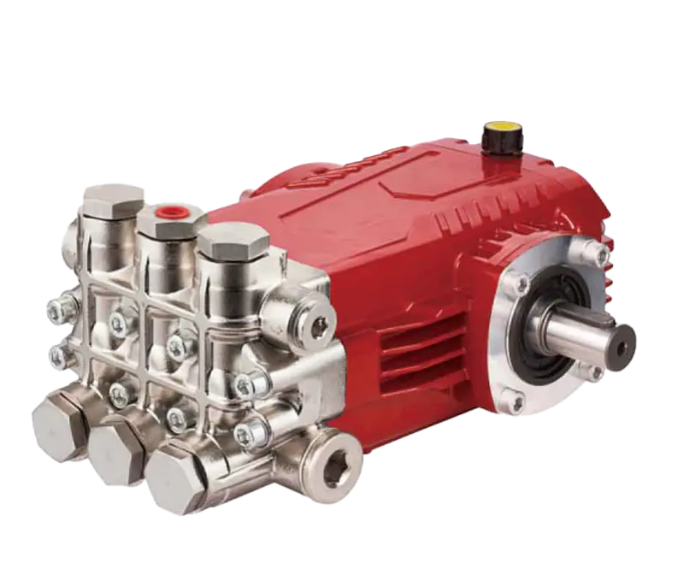
The manufacturing process grows out of this movement. It is not a straight line. It bends, pauses, and sometimes loops back on itself. A pump takes shape through many small decisions rather than one large action. Understanding this process means looking at how those decisions connect.
How does planning quietly influence everything that follows?
Before any material is cut or shaped, there is a quieter phase that rarely draws attention. Planning does not produce visible parts, yet it defines how everything will unfold later.
Inside this stage, drawings are read with care. Not just for shape, but for intention. A line on paper represents a future step on the floor. If that line is misunderstood, the error may not appear until much later, when correction becomes more difficult.
Planning also considers how work will move. It is not only about what to make, but how to make it without unnecessary stops. Workers need space, tools need to be available, and steps need to follow a logical order. When this order feels natural, production flows. When it does not, small interruptions begin to build.
Sometimes adjustments happen here. A detail may be simplified. A sequence may be rearranged. These changes are not dramatic, yet they can prevent confusion once production begins.
| Planning Aspect | What It Involves | Why It Matters |
|---|---|---|
| Drawing Reading | Interpreting structure | Avoids later rework |
| Workflow Setup | Arranging steps | Keeps movement smooth |
| Resource Check | Confirming materials/tools | Prevents delays |
Planning is easy to overlook because it leaves no physical trace. Still, its influence stays present in every stage that follows.
What happens when materials first enter the factory?
Materials do not arrive as finished forms. They come in basic shapes, often uniform and unremarkable. At this point, they carry potential rather than identity.
Handling begins as soon as they enter the space. They are sorted, stored, and sometimes marked for specific uses. This early organization helps reduce confusion later. A misplaced material can interrupt the flow in ways that are not immediately obvious.
There is also a sense of familiarity in how materials are handled. Workers learn how different types respond to movement and contact. Some feel stable and predictable. Others require more careful positioning.
Even before shaping begins, small decisions are made. Which piece will be used first. How it will be moved. Where it will be placed. These actions may seem routine, but they influence how smoothly the next stage unfolds.
How do raw forms slowly become recognizable components?
The steady hum of the machines fills the shop floor like a living pulse. You hear it before you even step inside—the low grind of lathes, the sharp chatter of milling bits biting into metal, the occasional hiss of coolant spraying across a hot workpiece. Raw stock comes in as ugly blocks or bars, nothing special to look at, but after hours of careful cutting, facing, and boring, they start to become something real.
Every pass of the tool takes off just enough material. Too aggressive and you ruin the piece; too timid and you waste time. Good operators develop a feel for it. They listen to the tool's song, watch the color of the chips curling away, and can tell by the vibration in the handle whether the setup is happy or about to complain. A slight change in tone might mean the insert is starting to dull or the workpiece is shifting a hair in the vise. Those little adjustments—tightening a clamp, tweaking the feed rate, or swapping a worn bit—keep everything on track.
What starts as a chunky slab slowly reveals clean edges, flat mating surfaces, and precise bores. Holes get tapped, grooves get cut for O-rings or keys, and tolerances get checked with micrometers and gauges under bright inspection lights. It's slow work. Repetitive, yes, but never truly automatic. Even the best CNC needs someone standing nearby who actually understands what "good" feels like.
By the end of the shift you've got shelves of parts that finally look like they belong in a pump—smooth, sharp, ready for the next stage. No two days are identical. Different material batches, slight temperature swings in the shop, or even humidity can change how the metal behaves. That's why experience still matters more than any program on a screen.
The whole process is this beautiful middle ground: rigid enough to be repeatable, but flexible enough that human attention keeps quality high. You can't just set it and forget it. Someone has to stay awake, stay curious, and catch the small stuff before it becomes expensive scrap.
Why does assembly often feel less predictable than it seems?
Assembly is where earlier work meets reality. Separate components come together, and their interaction reveals more than their individual forms.
On paper, assembly may appear straightforward. In practice, it involves constant adjustment. A part that fits well in isolation may require slight repositioning when combined with others. These moments are expected rather than unusual.
Workers rely on both instruction and habit. They follow established steps, yet they also respond to what they see and feel. A connection may need tightening. An alignment may need correction. These actions happen quickly, often without formal discussion.
There is also a rhythm to assembly. Parts move from one position to another. Tools are picked up and set down. The sequence repeats, but each cycle carries small differences.
| Assembly Element | What Happens | What It Reveals |
|---|---|---|
| Positioning | Parts are aligned | Accuracy of earlier work |
| Securing | Connections are fixed | Stability of structure |
| Adjusting | Minor corrections | Interaction between parts |
Assembly does not simply combine pieces. It tests how well those pieces were prepared.
How does inspection become part of everyday work?
Inspection does not stand apart from production. It blends into it. Rather than being a separate activity, it becomes part of the routine.
At times, inspection is formal. A worker pauses, checks a detail, and confirms that it meets expectations. At other times, it is almost instinctive. A quick glance or a brief touch can reveal whether something feels right.
This continuous checking helps prevent issues from moving forward. A small problem caught early saves time and effort later. It also reduces the need for larger corrections.
Inspection is not only about finding faults. It also builds confidence. When each stage is checked, the final product becomes more predictable.
There is a quiet discipline in this approach. Work continues, but awareness remains active.
What changes during surface finishing?
After assembly, the nature of work shifts. The focus moves away from structure and toward condition. Surface finishing prepares the Industrial High Pressure Pump for the environment it will enter.
This stage often feels calmer. Movements slow down. Attention narrows to smaller details. A surface is cleaned, smoothed, or treated to reduce wear.
Even though these actions appear simple, they require care. A small imperfection left untreated may affect how the pump behaves over time. Addressing it now is easier than dealing with it later.
There is also a sense of completion that begins to emerge. The product looks more unified. Its form is clearer. What was once a collection of parts now appears as a single piece.
| Process Stage | Nature of Work | Focus |
|---|---|---|
| Shaping | Transforming material | Form |
| Assembly | Combining components | Structure |
| Finishing | Refining surfaces | Condition |
Finishing does not change the core structure. It prepares the surface for what comes next.
How does testing reveal more than appearance?
Testing introduces a different perspective. The pump is no longer viewed as an object, but as something that moves and responds.
During this stage, attention shifts to behavior. Workers observe how the pump operates under controlled conditions. They listen, watch, and sometimes repeat the process to confirm consistency.
Testing is not about pushing limits. It is about understanding response. A stable pattern suggests that earlier stages were carried out well. An unexpected variation may point to something that needs review.
This stage also creates a connection between production and use. It offers a glimpse of how the pump will perform once it leaves the factory.
Testing can feel slower than other stages. There is less visible action, but more focused observation.
What happens as products are prepared to leave the factory?
After testing, the process becomes quieter. The pump is no longer being shaped or adjusted. It is being prepared for movement beyond the factory.
Cleaning may take place to remove any remaining marks from production. Packaging follows, designed to protect the product during transport. The goal is to preserve the condition achieved during testing.
Handling becomes more careful. Each unit is treated as complete. There is no expectation of further change within the factory.
This stage may seem simple, yet it carries importance. Improper handling here can undo earlier work. Care ensures that the pump arrives ready for its next setting.
How do people keep the process connected from start to finish?
Across all stages, people remain the connecting element. Machines assist, but coordination depends on human awareness.
Communication is often brief. A short comment, a quick signal, or a shared glance can keep the process aligned. These small exchanges prevent larger disruptions.
Over time, a sense of rhythm develops. Workers understand how their actions affect others. They adjust without needing detailed instruction. This awareness keeps the process steady even when conditions change.
The manufacturing process is shaped as much by interaction as by structure. Each step depends on the one before it, and supports the one that follows. This connection is not always visible, yet it holds the entire system together.
Previous Post
What Is the Difference Between Plunger Pump Factory and Other Pump Factory Types
Next Post
What Is a Ball Piston Pump and How Does It Work
Related Products

CONTACT US
- Address: No. 2880, East Section of Development Avenue, Sanjia Street, Taizhou Bay New District, Taizhou City, Zhejiang, China.
- Tel: +86-13665766622
+86-18806588150 - E-mail: [email protected]
Copyright © Taizhou Feike Mechanical Technology Co., Ltd.

Wholesale Triplex Plunger Pump Factory