

 English
 Español
 русский
What Is a Ball Piston Pump and How Does It Work
2026-05-29
In many workshops and job sites, fluid power is present even when it is not obvious. Machines lift, press, turn, and carry loads with the help of hidden systems. At the center of many of these systems sits a pump. Among the different designs in use, the ball piston pump has a structure that feels both simple and unusual at the same time.
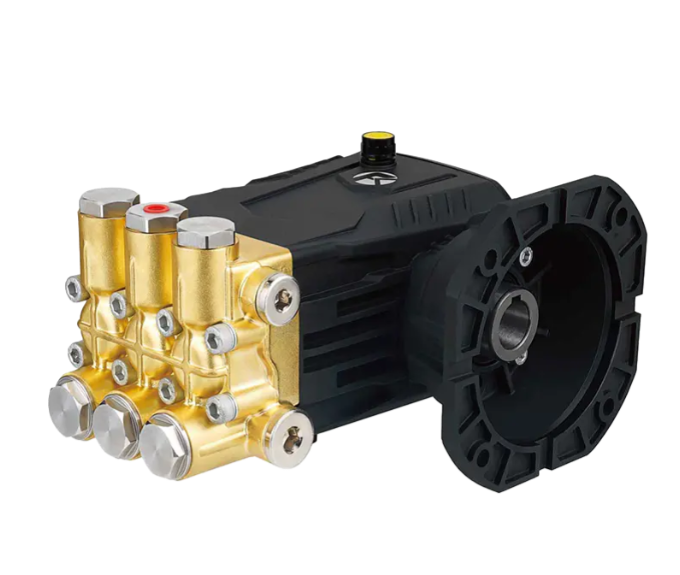
People often come across the name without a clear picture of what it actually does. The idea becomes easier to follow once you look inside and trace how motion turns into flow. This article takes a closer look at that process, step by step, without relying on dense explanations.
What is a Ball Piston Pump ?
A ball pump belongs to the group of pumps that move fluid in fixed amounts. Instead of spinning fluid outward or pushing it with blades, it traps small portions and sends them forward in a steady rhythm.
What makes it different is the use of small spherical parts. These balls sit inside chambers and take on the role that pistons would usually play. They are not fixed in one direction. As the pump turns, each ball shifts back and forth inside its space.
From the outside, the pump housing often looks no different from other compact units. The change lies inside, where motion follows a repeating path. Each turn of the drive shaft sets off a sequence that draws fluid in and pushes it out again.
The concept is not difficult to grasp. It is closer to a mechanical routine than a complex system. Once the pattern is clear, the rest follows naturally.
How does a ball piston pump operate?
Inside the pump, there is a rotating block that holds several chambers arranged in a circle. Each chamber contains one ball. Around this rotating part sits a guiding surface that controls how far each ball moves.
As the block turns, the balls do not stay still. They follow the shape of the guide. This creates a back-and-forth motion while the whole assembly continues to rotate.
A single cycle can be described in a simple way:
When a ball moves outward, the space behind it grows. This drop in pressure allows fluid to enter through an inlet opening.
As rotation continues, the chamber becomes separated from the inlet. The fluid is now contained.
The ball then begins to move inward. The available space shrinks, and the fluid is forced toward the outlet side.
Finally, the fluid leaves the chamber, and the ball returns to its starting position to repeat the process.
Since several chambers are active at the same time, the flow does not stop and start in a noticeable way. Instead, it appears steady, with each chamber taking its turn.
Why use a ball instead of a standard piston?
At first glance, replacing a traditional piston with a ball might seem like a small change. In practice, it affects how the internal parts interact.
A sphere does not have edges. Contact happens over curved surfaces rather than flat ones. This can spread forces in a more even way. It also allows the ball to adjust slightly if alignment shifts during operation.
Another point is how the ball moves against the guiding surface. It does not only slide. Part of its motion involves rolling. This mixed movement can change how surfaces wear over time.
In some cases, this design helps reduce the chance of sharp friction points forming. The result is a motion that feels smoother, especially during continuous use. The difference may not be dramatic at first, but it becomes noticeable over longer periods.
Where are ball piston pumps commonly used?
Piston pumps often appear in equipment that needs reliable fluid movement without taking up too much space. They are not limited to one type of industry.
You can find them in:
- Construction machinery that lifts or tilts loads
- Agricultural equipment used in field operations
- Industrial machines that rely on repeated motion
- Transport-related systems where compact design matters
- Marine setups where steady flow is important
These environments share a few traits. Space can be tight. Movement is repeated many times. Equipment is expected to work without constant adjustment.
In such settings, a pump that can deliver consistent output while staying relatively compact becomes useful. The ball piston design fits into that role without drawing much attention to itself.
How does it compare with other pump types?
Different pump designs solve the same problem in different ways. Some rely on rotating parts that mesh together. Others use sliding components or flexible surfaces.
The piston pump sits somewhere in between. It combines rotation with a form of reciprocating motion. This gives it characteristics that overlap with other designs, while still keeping its own identity.
| Aspect | Ball Piston Pump | Gear Pump | Vane Pump |
|---|---|---|---|
| Internal movement | Rolling and sliding | Rotating contact | Sliding vanes |
| Flow feel | Even and continuous | Slight variation | Smooth output |
| Structural layout | Compact, layered | Simple, direct | Moderate complexity |
| Contact surfaces | Curved interaction | Tooth engagement | Edge contact |
This table is not meant to rank one design over another. Each has its place. The choice depends on how the pump will be used and what kind of motion is required.
What affects how it performs?
Even simple mechanical devices run differently based on real‑world usage, and piston pumps are no different.
Several key factors directly impact how well they operate:
- How precisely moving parts line up with one another
- The condition of inner working surfaces
- The type of liquid passing through the pump
- Ambient operating conditions around the unit
For instance, thin free‑flowing liquids move through the pump much differently than thick viscous fluids. Temperature shifts also cause internal components to expand or shrink, altering performance little by little.
Minor issues add up over long‑term use. A tiny misalignment won't create problems right away, but it will slowly affect pump efficiency over time. That's why regular monitoring is more important than frequent unnecessary adjustments.
How is maintenance usually handled?
Routine pump maintenance mainly relies on spotting abnormal signs, rather than regularly taking the whole unit apart. Since the pump runs on a consistent repeating cycle, any small change in performance is easy to notice.
Operators typically watch for these common warning signs:
- Odd noises while the pump is running
- Shifts in liquid flow speed or pressure
- Fluid leaks around pipe connections
- Visible wear on external components
Unusual behavior usually means deeper inspection is needed. In most cases, the pump still keeps working even when early warning signs appear.
Taking the pump apart to check internal balls and chambers is only done during planned service intervals, not daily checks. This method cuts down on unnecessary downtime while keeping the pump reliable long‑term.
How is the design changing over time?
The core working principle of piston pumps has stayed largely the same over the years. Most updates focus only on fine‑tuning small details.
Design improvements mostly optimize how internal parts work together. This includes polishing inner surfaces for smoother movement and tweaking ball‑guide pathways slightly for better performance.
Modern upgrades also integrate monitoring technology into pump systems. Pressure and flow sensors track real‑time data without modifying the pump's basic mechanical structure.
Manufacturers don't redesign the pump from scratch. Instead, they improve on proven existing designs. The aim is to make piston pumps more compatible with modern equipment setups while keeping their original practical function unchanged.
Why does this design continue to be used?
Some mechanical ideas stay in use because they strike a balance between simplicity and function. The piston pump falls into this category.
It does not rely on complicated linkages. The motion comes from a repeating pattern that is easy to understand once seen. This makes it adaptable to different types of equipment.
Its ability to produce steady flow through a compact structure also plays a role. In many machines, space is limited, and components need to fit without adding unnecessary bulk.
The design may not stand out at first glance, but it continues to meet everyday needs in a quiet way.
What should be considered before choosing one?
Selecting a pump is rarely about a single feature. It involves looking at how the pump will fit into a larger system.
Points to think about include:
- The kind of movement the system requires
- The nature of the fluid involved
- Available space within the equipment
- Expectations for consistent operation
- How maintenance will be handled over time
Each factor connects to the others. A pump that works well in one setup may not suit another. The aim is to find a balance that matches the system as a whole.
How does internal motion define its behavior?
The identity of a piston pump comes from how its parts move together. Rotation alone would not create the same effect. The added back-and-forth motion of each ball changes how fluid is handled.
Each ball follows a path shaped by the guide around it. This path causes it to move in and out while the assembly rotates. The result is a layered motion that combines circular and linear elements.
This pattern repeats without much variation. Over time, it creates a steady rhythm inside the pump. Fluid enters, is carried forward, and leaves in a continuous cycle.
Understanding this motion helps explain why the pump behaves the way it does. It is not just a set of parts, but a coordinated movement that repeats with each turn.
How does it fit into modern equipment?
Modern systems often bring together mechanical and digital elements. Pumps are expected to operate within these environments without losing reliability.
The ball piston pump can be used in both traditional and updated systems. Its operation does not depend on electronic control, yet it can work alongside monitoring tools that track performance.
This flexibility allows it to remain relevant as equipment evolves. It can be part of a simple setup or a more connected system without major changes to its design.
In many cases, its role stays the same: moving fluid in a steady and predictable way while the surrounding system handles other tasks.
Previous Post
What Is the Manufacturing Process in a High Pressure Pump Factory
Next Post
What are the Advantages and Limitations of a Piston Pump
Related Products

CONTACT US
- Address: No. 2880, East Section of Development Avenue, Sanjia Street, Taizhou Bay New District, Taizhou City, Zhejiang, China.
- Tel: +86-13665766622
+86-18806588150 - E-mail: [email protected]
Copyright © Taizhou Feike Mechanical Technology Co., Ltd.

Wholesale Triplex Plunger Pump Factory