

 English
 Español
 русский
Are Custom Solutions Important in High Pressure Pump Manufacturer
2026-07-03
High pressure pump systems rarely operate in identical conditions. One project may require stable flow over long periods. Another may involve frequent changes in workload or limited installation space. These differences shape how equipment is designed, selected, and used in real environments.
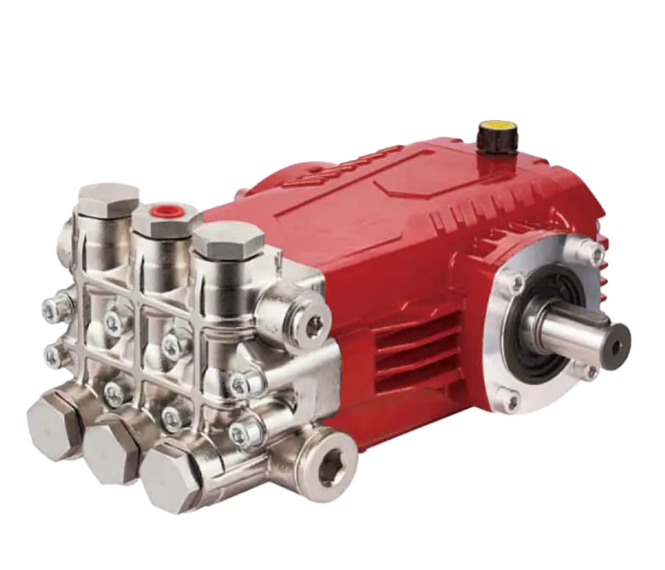
In this context, custom solutions have become a practical direction in pump manufacturing. They are not about adding complexity. They are more about matching real-world conditions in a clearer way.
Why do high pressure pump systems rarely follow a single design pattern?
Industrial working conditions vary widely. Even businesses in the same field face different site layouts, production workflows and daily operating routines.
One pump might run nonstop around the clock on a line, while another only switches on and off in repeated cycles. Some sites need equipment that fits tight small spaces, others leave plenty of room for easy repairs later.
No one-size-fits-all pump design can handle all these varied demands well. Custom builds fix this mismatch by tweaking the whole setup to suit actual site conditions.
What does "custom solution" actually mean in pump manufacturing?
Custom pump work isn't just resizing parts or altering outer looks. It mainly adjusts how the whole unit performs under a site's unique working environment.
Adjustments cover connection ways with other equipment, how the pump handles shifting loads, and whether it fits the available installation area.
Most custom tweaks are small targeted changes instead of full overhauls. High Pressure Pump Manufacturer focus on matching the pump to existing processes instead of rebuilding the whole system from scratch.
How do working conditions influence pump design choices?
Pump systems respond directly to their operating environment. Several factors often shape the final design direction:
- Operating stability requirements
- Installation space limitations
- Type of fluid or material handled
- Frequency of operation changes
- Maintenance accessibility
Even small differences in these conditions can lead to noticeable changes in system behavior. This is why early evaluation is important before final design decisions are made.
Comparison: Standard design vs custom solution in real use
| Aspect | Standard Pump Design | Custom Pump Solution |
|---|---|---|
| Application fit | General conditions | Specific working environment |
| Installation | Fixed layout approach | Adapted connection and placement |
| Performance behavior | Stable in common use cases | Adjusted to actual workload patterns |
| Flexibility | Limited adjustment range | Higher adaptability |
| Maintenance planning | Standard routine structure | Designed around access and usage needs |
| Project suitability | Broad but general | Targeted and specific |
This comparison does not suggest one is better than the other. Instead, it shows how different design logic serves different needs.
Why flexibility has become more important in pump systems?
Modern industrial environments are less static than before. Production demands can change. Layouts may be updated. System upgrades may happen without full replacement.
In such situations, flexibility becomes more valuable than fixed structure.
Custom solutions support this flexibility by allowing adjustments during planning stages rather than after installation. This reduces later modifications and helps the system stay aligned with operational changes.
How do custom solutions improve system integration?
High pressure pump systems are usually part of a larger network. They connect with pipelines, storage units, and control components.
If one part does not align well, the entire system can feel less stable in operation. This is not always about performance alone. It is also about how smoothly components work together.
Custom solutions help in several practical ways:
- Better alignment with surrounding equipment
- Smoother installation in limited spaces
- Reduced need for structural modification on site
- Improved coordination between connected systems
Integration is often overlooked at the beginning, but it becomes very visible during long-term use.
What factors are usually considered in customization planning?
Customization is not random. It usually follows a structured evaluation process based on real usage needs.
Key points often include:
Working environment review
Temperature, space, and external conditions are checked to understand limitations.
Operation pattern analysis
Whether the system runs continuously or in cycles changes design direction.
Load variation understanding
Stable or changing workload affects system response behavior.
Installation structure mapping
Connection points and available space are reviewed before design.
Long-term use expectations
Maintenance access and durability needs are considered early.
Each point helps narrow down how the system should be adapted.
Does customization always mean higher complexity?
Not necessarily. Customization is often misunderstood as something complicated. In reality, many adjustments are simple and focused.
Some examples include:
- Adjusting connection layout for easier installation
- Modifying structure to fit available space
- Aligning system behavior with operating cycles
- Improving access for maintenance work
These changes are often practical rather than technical in nature.
The goal is not to make the system more complex, but to make it more suitable.
When standard solutions are still enough?
Standard pump systems still have strong value in many cases. When operating conditions are stable and predictable, a standard design can perform reliably without modification.
Typical situations include:
- Repeated processes with similar workload
- Fixed installation environments
- Limited variation in operation cycles
- General-purpose industrial use
In these cases, simplicity can be an advantage. It reduces planning time and keeps system structure straightforward.
How customization affects long-term operation?
Long-term performance is often where differences become more visible.
A system that matches real conditions from the beginning tends to require fewer adjustments later. It also reduces unexpected stress during operation.
Some long-term effects include:
- More stable daily operation behavior
- Reduced need for structural correction
- Easier maintenance planning
- Better alignment with system upgrades
Over time, these small advantages accumulate into noticeable operational stability.
What challenges come with custom pump solutions?
Custom pumps bring great flexibility for on-site use, but they also come with a few practical hurdles that teams need to handle properly.
First of all, teams have to spend more time on upfront planning and confirmation work. Every functional detail and site condition needs to be sorted out in advance. It also takes thorough communication to make sure all on-site requirements are fully understood and correctly converted into design standards.
Compared with standard pumps, custom models also need extra coordination during installation and commissioning. What's more, any misjudgment of the actual working conditions in the early stage will directly affect the pump's final operating performance.
These issues won't stop custom solutions from working, but they do require careful arrangement and strict checks in the early project phase.
How custom solutions reflect modern manufacturing thinking?
Today's pump manufacturing no longer simply relies on fixed universal models. The industry is shifting its focus to real on-site application scenarios.
Customized pump designs perfectly fit this industry change. Designers tailor every core parameter and structural layout according to the customer's actual working environment, which greatly avoids performance mismatch and useless functional waste.
This also represents a key upgrade in modern industrial manufacturing. The traditional single standardized production mode is gradually giving way to flexible, scenario-oriented and user-oriented design ideas.
FAQ
Are custom solutions always necessary in high pressure pump manufacturing?
No. They are mainly useful when working conditions require specific adaptation.
What is the main purpose of customization?
To align pump system behavior with real application conditions.
Can standard pump designs still be used effectively?
Yes, especially in stable and predictable environments.
Does customization improve system integration?
It often helps improve compatibility with surrounding equipment and installation layout.
Is customization always complex?
Not always. Many adjustments are practical and focused on real usage needs.
Previous Post
How High Pressure Pump Supplier Are Adapting to Changing Industrial Needs
Next Post
How Can Users Evaluate the Durability of a China Plunger Pump
Related Products

CONTACT US
- Address: No. 2880, East Section of Development Avenue, Sanjia Street, Taizhou Bay New District, Taizhou City, Zhejiang, China.
- Tel: +86-13665766622
+86-18806588150 - E-mail: [email protected]
Copyright © Taizhou Feike Mechanical Technology Co., Ltd.

Wholesale Triplex Plunger Pump Factory