

 English
 Español
 русский
How Can Users Evaluate the Durability of a China Plunger Pump
2026-06-26
Durability is not something that shows itself immediately in a China plunger pump . At the beginning, most pumps look similar in operation. They start, run, and deliver output in a stable way. The difference appears later, after repeated use, changing loads, and long working hours.
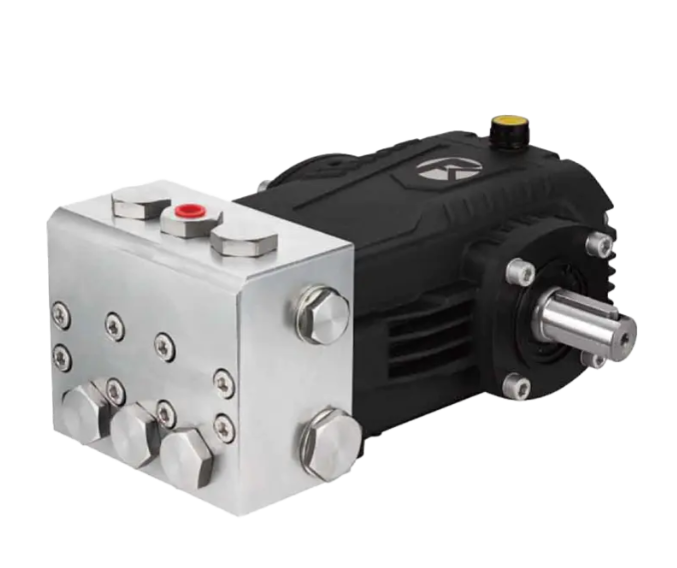
For users, durability is not a single measurement. It is a gradual understanding built from daily observation. The more the pump is used in real conditions, the clearer its long-term behavior becomes. Some issues appear slowly. Others stay hidden until the system is under stress.
This is why evaluation cannot rely on short inspection alone. It needs time, attention, and comparison across different working stages.
What does durability actually mean in a plunger pump?
Durability is often confused with lifespan. The two are not the same.
A pump may continue working for a long time, but its performance may slowly become unstable. Another pump may run for fewer cycles but stay consistent throughout its usage period.
In real applications, durability is closer to "stable performance over time." It reflects how well the pump keeps its working behavior under repeated conditions.
Users usually judge durability through small changes, such as:
- Whether operation feels steady after long use
- Whether performance changes under similar conditions
- Whether adjustments become more frequent
- Whether output remains predictable
These small signals matter more than appearance or initial operation.
Why material condition becomes a silent indicator of durability?
Material behavior is not always visible, but it shapes everything inside the pump.
Inside a Plunger Pump Factory , components move under repeated force. If the material remains stable, movement stays smooth. If the material begins to change under stress, small variations start to appear.
These variations are not sudden. They build up slowly.
Users may notice:
- Slight changes in movement smoothness
- Subtle differences after long operation
- Gradual shifts in response under load
- More sensitivity to working conditions
The important point is not only strength, but stability under repetition. A material that behaves consistently under long cycles usually supports better durability.
Durability often starts from how quietly the material holds its shape over time.
How does long-term operation reveal real durability?
Short-term testing can only show limited behavior. It cannot fully reflect how the pump reacts after continuous use.
Long-term operation tells a different story.
At first, most pumps behave normally. After a period of operation, patterns begin to appear. Some pumps maintain steady behavior. Others begin to show small irregularities.
These differences may include:
- Slight variation in output smoothness
- Increased attention needed during operation
- Small differences between early and later performance
- Gradual change in running sound or rhythm
These are not immediate faults. They are early indicators of how the pump adapts to long-term stress.
Durability becomes clearer when the same behavior is observed across extended time.
What role does pressure behavior play in evaluation?
A plunger pump often works under changing pressure conditions. This makes pressure behavior one of the most practical ways to understand durability.
Stable pressure response usually means the system is handling internal movement well. When pressure response becomes uneven, it may suggest that internal components are experiencing more stress.
Users often observe:
- Smoothness during load changes
- Stability under continuous operation
- Reaction when system demand shifts
- Behavior during extended working periods
Pressure behavior is not only about strength. It is about how controlled the system remains under repeated force.
Small changes in pressure response often appear before visible wear.
How does structure influence long-term stability?
The internal structure of a pump decides how force is distributed during operation.
If movement is balanced, stress spreads evenly. If structure is uneven, certain parts may carry more load than others.
Over time, uneven stress creates variation in performance.
Structural influence can be seen in:
- How smoothly components move together
- Whether wear appears evenly or in specific areas
- How the pump responds after long cycles
- Whether operation remains balanced under load
A stable structure does not show itself immediately. It becomes noticeable after repeated use cycles, when differences start to appear between early and later performance.
Why does usage environment change durability results?
Even a well-designed pump can behave differently depending on where it is used.
Environment affects how the system ages. Temperature changes, vibration, installation conditions, and workload patterns all influence long-term behavior.
For example:
- A stable environment may slow down wear
- A variable environment may increase small fluctuations
- Continuous heavy use may reveal stress patterns earlier
- Irregular use may hide early signs of change
These factors do not immediately damage the pump. Instead, they shape how fast durability differences appear.
Users often underestimate environment because its effects are gradual rather than sudden.
How can maintenance habits influence durability perception?
Maintenance is often treated as a separate activity, but it directly affects durability.
A pump that is maintained regularly tends to show more stable behavior. One that is not maintained properly may develop uneven performance over time.
However, maintenance is not only about frequency. It is also about consistency and method.
Users may notice:
- Stability after routine care
- Changes in behavior after cleaning or adjustment
- Frequency of minor corrections needed
- Recovery of performance after servicing
Sometimes, a pump appears less durable simply because maintenance is not aligned with its working condition.
What are early signs that durability may be declining?
Durability decline does not appear suddenly. It usually starts with small, almost invisible changes.
These early signs do not mean immediate failure. They indicate that internal conditions are shifting.
Common signals include:
- Slight increase in operational variation
- More frequent need for adjustment
- Less stable behavior under similar load
- Small differences between cycles
These changes are often subtle. Users may ignore them at first. But over time, they form a pattern.
Recognizing these signs early helps users understand long-term behavior before problems become visible.
Why is consistency more important than peak performance?
A pump that performs strongly at the beginning is not necessarily durable. High performance at one moment does not guarantee stable performance over time.
Consistency shows how well the pump maintains its behavior across different stages of use.
In real applications, consistency often matters more than peak output.
A stable pump tends to:
- Maintain similar behavior over time
- Reduce unexpected variation
- Require fewer adjustments
- Support predictable system operation
Durability is closely linked to this steady pattern, not occasional strong performance.
How does usage pattern shape durability evaluation?
Different users operate pumps in different ways. Some systems run continuously. Others operate in cycles or irregular intervals.
These patterns influence how wear appears.
For example:
- Continuous operation shows long-term stability faster
- Intermittent use may delay visible wear patterns
- Variable load makes performance changes more noticeable
- Stable load helps maintain predictable behavior
Because of this, durability cannot be judged without understanding how the pump is actually used.
Usage pattern is part of the evaluation, not just background information.
Why does durability evaluation require time and observation?
Durability is not a fixed point. It is a pattern that becomes visible over time.
Each stage of use reveals different information. Early use shows basic behavior. Mid-term use shows adjustment patterns. Long-term use shows stability limits.
Only by observing all stages together can users understand real durability.
This is why evaluation is less about a single test and more about continuous observation in real conditions.
Previous Post
Are Custom Solutions Important in High Pressure Pump Manufacturer
Next Post
China High Pressure Pump Types and Their Industrial Applications
Related Products

CONTACT US
- Address: No. 2880, East Section of Development Avenue, Sanjia Street, Taizhou Bay New District, Taizhou City, Zhejiang, China.
- Tel: +86-13665766622
+86-18806588150 - E-mail: [email protected]
Copyright © Taizhou Feike Mechanical Technology Co., Ltd.

Wholesale Triplex Plunger Pump Factory