

 English
 Español
 русский
Home / News / Industry News / How to Choose a High-Pressure Plunger Pump for Different Industrial Applications
How to Choose a High-Pressure Plunger Pump for Different Industrial Applications
2026-09-28
Choosing a high-pressure pump is not just about finding the model with the highest pressure on the datasheet. That number may look impressive, but it does not tell you whether the pump will actually work well in your equipment.
The pump needs to match the fluid, flow rate, working pressure, temperature, operating hours, drive system, and installation conditions. Miss one of these, and you may end up with a pump that looks suitable on paper but causes problems after installation.
A High-Pressure Plunger Pump is used when an industrial system needs controlled fluid delivery at relatively high pressure. Common applications include water jetting, industrial cleaning, pressure testing, reverse osmosis, chemical processing, agricultural spraying, and other fluid-handling equipment.
For manufacturers, distributors, system integrators, and industrial buyers, the easiest way to choose is to start with the actual working conditions. Once those are clear, comparing pumps becomes much less confusing.
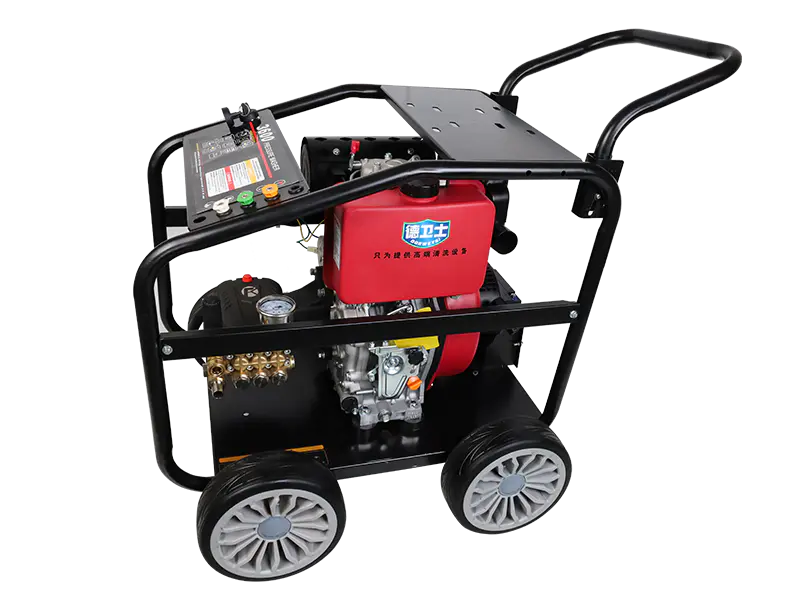
What Is a High-Pressure Plunger Pump?
A plunger pump is a positive displacement pump. It uses one or more plungers that move back and forth inside the pump chamber. Fluid enters through an inlet valve and is then pushed out through the outlet valve.
The basic idea is fairly simple. The important part is how the pump is designed and how it performs under the conditions where it will be used.
Plunger pumps are commonly selected for applications that need:
- High operating pressure
- Controlled fluid delivery
- Different flow rates
- Continuous or intermittent operation
- Integration with industrial equipment
- The actual pressure and flow available depend on the pump design, speed, materials, and other operating conditions. So the manufacturer's detailed specifications still matter.
Start With the Required Pressure and Flow Rate
Pressure and flow are usually the first two numbers buyers should work out.
A common mistake is to look at the maximum pressure and assume that a higher rating means a better choice. It doesn't work that way. A pump designed around a particular working range should be selected according to the actual duty point.
Before asking a supplier for a quotation, try to determine:
- Required working pressure
- Maximum system pressure
- Required flow rate
- Operating speed
- Continuous or intermittent operation\
| Application | Main Requirement |
|---|---|
| Industrial cleaning | Suitable pressure and flow |
| Water jetting | High pressure and stable delivery |
| Pressure testing | Controlled pressure |
| Reverse osmosis | Pressure suitable for the membrane |
| Spraying systems | Consistent flow and pressure |
| Chemical processing | Pressure and fluid compatibility |
If you know the normal working pressure and flow, give those numbers to the manufacturer. That is much more useful than simply saying you need a “high-pressure pump.”
The Fluid Being Pumped Is Just as Important
The liquid inside the pump can change the whole selection process.
Clean water is one thing. A chemical solution, oil, solvent, or abrasive fluid is another. Temperature and viscosity can also affect how the pump and its seals perform.
Before selecting a pump, buyers should provide information about:
- Fluid type
- Chemical concentration
- Fluid temperature
- Viscosity
- Solid particle content
- Corrosiveness
- Required cleanliness
For example, a pump designed for clean water should not automatically be used for an aggressive chemical. The pump head might handle the pressure, but the seals or other wetted parts may not be suitable for the fluid.
This is why it is worth telling the supplier exactly what is being pumped. “Water-based liquid” is useful information, but the actual composition is much better.
Pump Materials Affect Compatibility and Service Life
Once the fluid is known, material selection becomes easier to discuss.
Different parts of a plunger pump may use stainless steel, alloy steel, ceramic materials, engineering plastics, or other materials. The choice depends on pressure, temperature, wear, and the fluid itself.
| Component | What Buyers Should Consider |
|---|---|
| Pump head | Pressure and fluid compatibility |
| Plunger | Wear resistance and surface condition |
| Valves | Corrosion and repeated movement |
| Seals | Temperature and chemical compatibility |
| Fittings | Pressure rating and material |
| Crankcase | Mechanical strength and lubrication |
For applications involving corrosive or abrasive fluids, do not leave material selection until the last stage. It can affect both reliability and maintenance costs.
Understanding the Duty Cycle Is Important
How long the pump runs each day makes a real difference.
A pump used for ten minutes at a time in a small machine has a different job from one running throughout a production shift. Heat, lubrication, seal wear, and mechanical fatigue all become more important as operating time increases.
So give the manufacturer some basic information:
How many hours will the pump run each day?
How often does it start and stop?
What is the normal working pressure?
Will it regularly run at high load?
Does the fluid temperature change?
There is no need to make this complicated. The supplier simply needs a realistic picture of how the pump will be used.
Motor and Drive Compatibility Need to Be Checked
The pump does not work alone. It needs a motor or another drive system, and the two have to be matched.
Important points include:
- Motor power
- Motor speed
- Shaft configuration
- Coupling method
- Rotation direction
- Electrical supply
- Mounting dimensions
As pressure and flow increase, the pump generally needs more driving power. If the motor is undersized, it may struggle during operation. On the other hand, choosing a much larger motor than necessary adds cost and can increase energy use.
For OEM equipment manufacturers, check the pump and motor dimensions early. It is much easier to make changes during design than after the equipment frame has already been built.
Number of Plungers Can Affect Pump Characteristics
Plunger pumps are available with different numbers of plungers. A multiple-plunger design can distribute the mechanical load and help provide smoother fluid delivery.
But the number of plungers alone does not tell you how smooth the output will be. Pump speed, internal design, cylinder arrangement, and other factors also matter.
If your application is sensitive to flow fluctuation, ask the manufacturer about pressure pulsation.
Some systems use an accumulator or pulsation dampener to smooth the output. In other words, don't look at the pump separately from the rest of the fluid system.
Pressure Pulsation Should Not Be Ignored
Because plunger pumps move fluid in repeated cycles, some pressure fluctuation is normal.
Whether this causes a problem depends on what the pump is doing.
A cleaning machine may tolerate some pulsation without much trouble. A more sensitive process may need steadier pressure. Excessive fluctuation can also affect hoses, fittings, valves, and downstream equipment.
Before selecting the pump, consider:
- Expected pressure pulsation
- Flow stability
- Number of plungers
- Pump speed
- Need for a pulsation dampener
- Sensitivity of downstream equipment
It is much easier to deal with this during system design than after installation.
Different Industrial Applications Have Different Priorities
There is no single specification that works for every application. What matters most depends on the job.
Industrial Cleaning Equipment
Industrial cleaning equipment generally needs enough pressure to remove dirt, grease, and other contaminants while still providing suitable flow.
Pressure, flow, duty cycle, seals, and water temperature are common concerns.
If detergents or cleaning chemicals are added, check the compatibility of the wetted materials as well.
Water Jetting
Water jetting can involve very high pressure and frequent operation.
Here, the pump head, plungers, seals, lubrication, and drive system deserve close attention. Hoses, fittings, and other downstream components also need to be rated for the working pressure.
Pressure Testing
Pressure testing is a little different. The system usually needs controlled and repeatable pressure instead of simply moving a large volume of liquid.
The target test pressure, fluid volume, testing frequency, and required stability should be defined before choosing the pump.
Reverse Osmosis
Reverse osmosis systems require pressure suitable for the membrane process.
Flow rate, pressure stability, water quality, material compatibility, and operating hours all need to be considered.
Agricultural Spraying
Agricultural equipment can use high-pressure pumps for spraying and other fluid-delivery work.
Flow, chemical compatibility, durability, and maintenance are important here. If fertilizers or crop-protection chemicals are involved, check the wetted materials with the pump manufacturer before making a decision.
Seals and Valves Deserve Special Attention
Seals and valves may be small, but they can cause plenty of trouble when they are not suited to the application.
The seals have to maintain pressure while the plunger keeps moving. They also need to handle the fluid and temperature.
Valves open and close repeatedly during operation, so their material and design matter too.
Problems may show up as:
- Reduced pressure
- Leakage
- Abnormal noise
- Unstable flow
- Higher operating temperature
When comparing suppliers, ask about seal materials, expected replacement intervals, and the availability of spare parts. These details may seem minor when buying the pump, but they matter later when the equipment needs servicing.
Installation Conditions Can Influence Performance
Even a suitable pump can have problems if it is installed poorly.
Some things to check include:
- Pump mounting
- Shaft alignment
- Inlet piping
- Outlet piping
- Suction conditions
- Filtration
- Ventilation
- Maintenance access
Pay particular attention to the inlet side. Poor suction conditions can affect pump performance and may contribute to cavitation.
The manufacturer should be able to provide installation requirements for the specific pump model, including operating limits and suction conditions.
What Is Cavitation and Why Should Buyers Care?
Cavitation happens when the local pressure in the fluid becomes low enough for vapor bubbles to form and then collapse.
That can lead to noise, vibration, reduced performance, and damage to internal components.
Plunger pumps can experience cavitation too.
Correct suction conditions, suitable piping, proper fluid temperature, and an appropriate pump speed can all help reduce the risk.
So when discussing a pump with a supplier, don't ask only, “What pressure can it reach?” Ask what suction conditions it requires as well.
Maintenance Requirements Affect Total Operating Cost
Every industrial pump needs some maintenance. The question is how much and how often.
Depending on the design, maintenance may include:
- Seal inspection
- Valve inspection
- Lubrication
- Plunger inspection
- Fastener checks
- Oil changes where applicable
- Cleaning
- Pressure and performance checks
For equipment that needs to run regularly, easy maintenance can be a practical advantage.
Ask whether wear parts are available separately and whether the manufacturer offers service kits, replacement seals, valves, or maintenance instructions.
Customization Can Be Useful for OEM Equipment
Standard pumps work for many applications, but OEM equipment often has its own requirements.
A High-Pressure Plunger Pump may need a particular mounting structure, shaft size, connection, pressure range, flow rate, or motor arrangement.
Depending on the manufacturer, customization may involve:
- Pump dimensions
- Flow rate
- Pressure range
- Connection ports
- Drive arrangement
- Mounting structure
- Materials
- Seal configuration
- Motor matching
For a custom project, provide drawings and application details early. The manufacturer can then determine whether an existing model can be modified or whether a different design is needed.
Testing a prototype before moving to larger production is also a sensible step.
What Should B2B Buyers Ask the Manufacturer?
Before choosing a supplier, ask enough questions to understand what you are actually buying.
| Question | Why It Matters |
|---|---|
| What pressure can the pump handle? | Confirms application compatibility |
| What flow rates are available? | Matches process requirements |
| Which fluids are supported? | Helps avoid material problems |
| What is the duty cycle? | Shows whether it suits continuous use |
| What motor power is required? | Helps select the drive |
| What materials are used? | Relates to fluid compatibility |
| What maintenance is required? | Helps plan operating costs |
| Are spare parts available? | Useful for long-term service |
| Can the pump be customized? | Important for OEM equipment |
| What testing is performed? | Helps verify actual performance |
For larger industrial projects, the supplier should be able to provide technical specifications, drawings, and relevant test information.
How to Compare High-Pressure Plunger Pumps
Price is obviously part of the purchasing decision, but it should not be the only thing being compared.
Look at the pump as part of the complete system.
| Factor | What to Evaluate |
|---|---|
| Pressure | Normal and maximum working pressure |
| Flow | Required process flow |
| Fluid | Chemical and temperature compatibility |
| Materials | Wetted component construction |
| Duty cycle | Intermittent or continuous operation |
| Drive | Motor speed and power |
| Maintenance | Service and replacement parts |
| Installation | Space and connection requirements |
| Customization | OEM-specific requirements |
| Supplier support | Technical and after-sales service |
This gives you a much clearer picture than comparing two pumps based on pressure and price alone.
Selecting the Pump Around the Complete Application
Choosing a High-Pressure Plunger Pump should start with the actual application.
Pressure and flow are important, but they are only part of the story. The fluid, materials, pump speed, duty cycle, suction conditions, drive system, pressure pulsation, and maintenance requirements can all affect how the pump performs.
For industrial users, the pump needs to fit the complete system. For distributors and wholesalers, understanding these differences also makes it easier to recommend a suitable model to customers.
When working with a manufacturer, provide as much application information as you can, review the technical data, and test samples when possible. A little extra checking at the beginning can save a lot of back-and-forth once the pump is already installed and running.
Previous Post
No previous article
Next Post
Stainless Steel Pump Supplier Brings Material Considerations Into Pump Selection
Related Products


CONTACT US
- Address: No. 2880, East Section of Development Avenue, Sanjia Street, Taizhou Bay New District, Taizhou City, Zhejiang, China.
- Tel: +86-13665766622
+86-18806588150 - E-mail: [email protected]
Copyright © Taizhou Feike Mechanical Technology Co., Ltd.

Wholesale Triplex Plunger Pump Factory